Dental Implant Marketing: How to Attract More Implant Patients in 2026
Short answer: implant patients research longer and worry more about cost than most dental patients. Practices that win them answer those worries on the page: what an implant costs and why, who is a candidate, what treatment involves, how financing works, and who will do the work. Then they bring the right searchers to that page with local SEO and focused Google Ads, and follow up every consultation request fast.
By Dr. Mahmoud Elsheikh, a dentist completing an MSD in Orthodontics · Updated
How implant patients decide
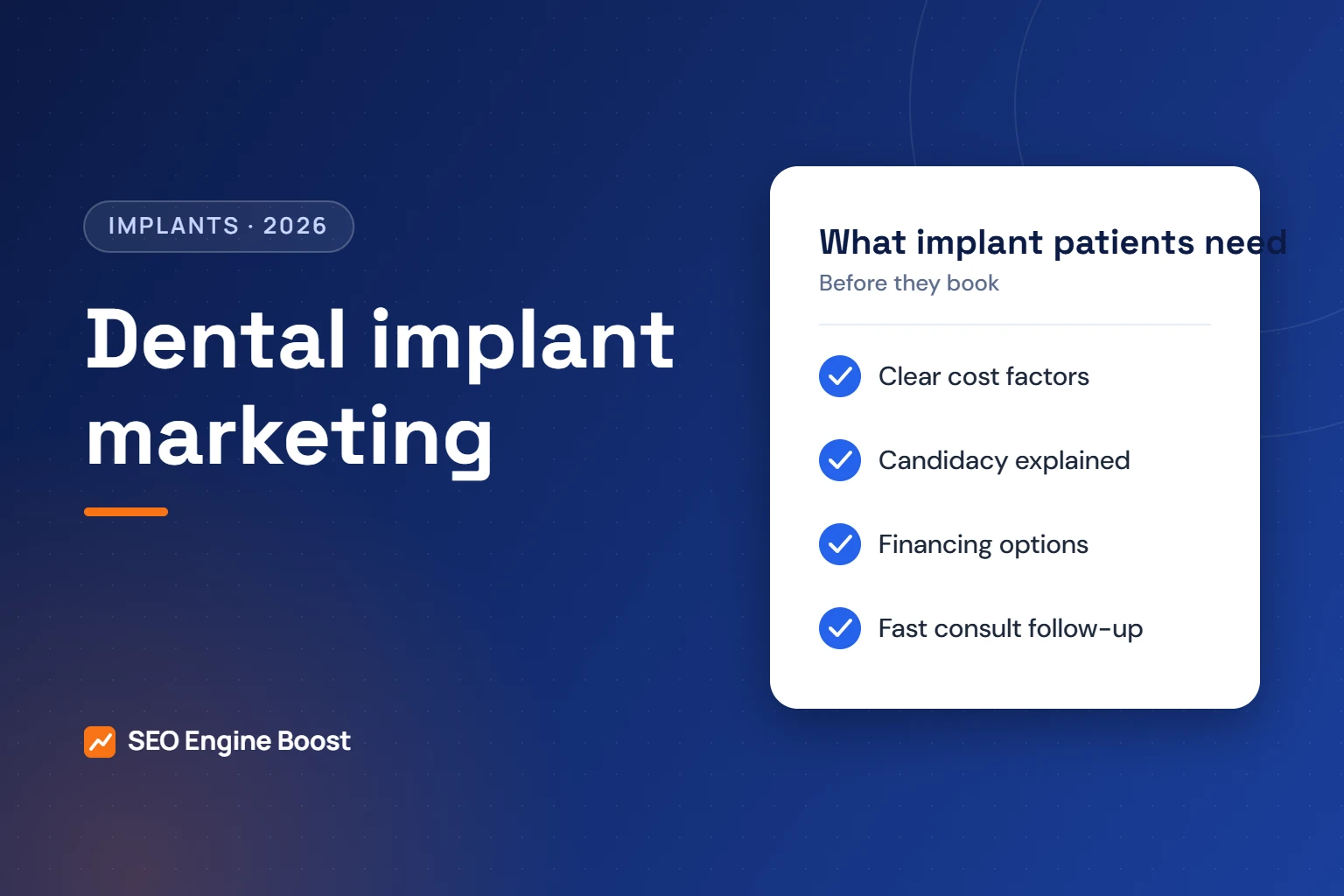
An implant is a large, often unexpected expense with a long treatment timeline. Patients typically compare several practices, read reviews closely, look for financing, and want to know who places the implant. Marketing that skips these questions loses patients to the practice that answers them.
1. Build an implant page that answers the real questions
- Cost factors: number of implants, bone grafting, type of restoration, imaging, and what a consultation includes.
- Options: single implant, implant bridge, implant-supported dentures, full-arch options, explained in plain language.
- Candidacy: bone, gum health, medical conditions and smoking, with “your dentist will assess” rather than promises.
- The process and timeline: consultation, placement, healing, restoration.
- Who does the work: the dentist’s training and experience, described accurately.
- Financing: plans you accept and how to apply.
2. Rank for local implant searches
List implants as a service on your Google Business Profile, link the implant page from your homepage and menu, add FAQ markup to genuine FAQs, and earn local mentions. See dental SEO for the full approach.
3. Run focused Google Ads to the implant page
A separate implant campaign with phrase and exact match keywords, strong negatives (jobs, courses, DIY, cheap abroad offers if you do not compete there) and call tracking. Work out the budget from the value of one implant case using the Google Ads budget calculator, and read Google Ads for dentists for setup.
4. Earn reviews that mention the experience
Ask every implant patient for a review once treatment is complete. Never offer incentives. Reply without confirming any treatment detail.
5. Follow up consultations properly
Many implant patients do not accept treatment at the first visit. A clear written plan, a financing conversation and a polite follow-up call a week later are often the difference. Track consultation-to-treatment rate monthly.
6. Keep claims honest
Avoid “painless”, “permanent” or “guaranteed” claims you cannot support, use before-and-after photos only with written consent, and follow your state dental board’s advertising rules. The FTC’s health products guidance requires that health claims be truthful and supported by evidence.
What to measure
| Metric | Why it matters |
|---|---|
| Implant consultation requests by source | Which channels create demand |
| Consultation show rate | Whether reminders and follow-up work |
| Consultation-to-treatment rate | Whether the plan and financing are clear |
| Cost per implant case | Whether marketing pays back |
Want help? Our dental marketing agency builds implant pages, local SEO and tracked campaigns for practices across the US. Marketing veneers and whitening too? Read cosmetic dentist marketing.
Frequently asked questions
How do dentists get more implant patients?
Build a clear implant page that answers cost, candidacy and recovery questions, show financing options, collect genuine reviews, run focused Google Ads to that page, and follow up every consultation request quickly.
Should a dental practice show implant prices online?
Showing a typical range, what affects the price and financing options usually helps, because cost is the first question most implant patients have. Invite them to a consultation for their own figure.
Are before-and-after implant photos allowed in marketing?
They can be used with the patient’s written consent, accurately and without implying every patient will get the same result. Check your state dental board’s advertising rules.
How long is the implant patient decision process?
Often weeks to months, because of cost and treatment length. Consultation follow-up, financing information and educational content help patients decide.