
Orthodontic website design
Orthodontic website design that turns visits into consultations
Your website is where a family decides whether to call you or the next practice on the list. We design fast, accurate orthodontic websites that answer the real questions, show your team and office honestly, and make booking a consultation easy on a phone.
- Built to pass Core Web Vitals
- Booking path in two taps
- You own the site and content
Launch checklist
- Mobile-first templatesDesigned
- LCP under 2.5 secondsTested
- WCAG 2.2 contrast and focusChecked
- 301 redirect mapReady
- Call and form trackingLive
Quoted in writing
Website design is scoped and priced in writing after a free audit. See SEO plans
No surprises
Clear scope and price agreed before any work begins.
You own it
Profile, analytics, ads and website accounts stay in your name.
Reviewed
Treatment pages clinically reviewed by a dentist completing an MSD in Orthodontics. How we work
What makes a good orthodontic website?
A good orthodontic website loads fast on a phone, explains treatments and costs in plain language, shows real doctors and real results, and makes booking a consultation easy from every page. The practice should own the domain and the site, and every call and form should be tracked so you know which pages bring patients. Every design decision faces one test: does it turn visits into consultations?
By Dr. Mahmoud Elsheikh · Updated
Why many practice websites underperform
A beautiful site that nobody can book from is an expensive brochure
Many orthodontic websites look polished on a large monitor and fall apart on a phone. The hero image takes several seconds to load, the phone number is an image that cannot be tapped, the treatment information is buried in one long page, and the consultation form asks for twelve fields. Each of those details loses patients who already found you.
Other sites are built on templates shared with dozens of practices, with the same stock photos and copy. They rarely rank well, because search engines see little that is unique, and they rarely persuade, because families can tell when a page was not written for them.
Orthodontic website design should start with the questions families ask and the action you want them to take. Every decision, from the sitemap to the size of the hero image, should support being found in search and booking a consultation.
What makes an orthodontic website work
Nine elements of a site that ranks and converts
Every site we build includes these. They are also the first things we check when reviewing an existing site.
A sitemap built from search
One page per treatment, patient group and location, planned from keyword research so each important search has a clear page to rank.
- Braces, clear aligners, early treatment, adult orthodontics
- First visit, cost and financing, insurance
- A page for every office
Mobile first
Google indexes the mobile version of your site, and most families find you on a phone. Mobile is designed first, not squeezed in later.
Speed
Compressed images, minimal scripts and quality hosting, aiming for Google’s good Core Web Vitals thresholds.
Booking path
Tap-to-call, a short consultation form and online scheduling where your software supports it.
Real people
Your doctors, team and office photographed honestly. Families want to see who they will meet.
Accessibility
Built toward WCAG 2.2: contrast, keyboard navigation, alt text, form labels and visible focus states. Accessible sites serve every patient and are easier for search engines to understand.
Privacy and secure forms
Forms collect only what is needed, use secure handling and avoid sending sensitive information to advertising platforms. Read about tracking pixels and patient privacy.
Accurate content
Treatment pages written for clarity and reviewed for clinical accuracy, without promises about outcomes.
SEO foundations
Clean URLs, one H1 per page, structured data, internal links, XML sitemap and fast templates from day one.
Performance targets
The numbers your website should meet
Google defines these Core Web Vitals thresholds for a good experience. We test every template against them before launch.
| Metric | What it measures | Good threshold | Common orthodontic site culprit |
|---|---|---|---|
| Largest Contentful Paint | How fast the main content loads | Within 2.5 seconds | Large hero images and sliders |
| Interaction to Next Paint | How quickly the page responds to taps | Under 200 milliseconds | Chat widgets and heavy scripts |
| Cumulative Layout Shift | How much the layout jumps while loading | Below 0.1 | Banners and images without set sizes |
Source: Google Search Central, Core Web Vitals. Strong scores support a good experience but do not guarantee rankings on their own.
From first sketch to launch
How we design and build your website
A typical project runs about eight to twelve weeks, depending on page count and how quickly content is approved.
- 1
Weeks 1 to 2
Discovery and site audit
Goals, patient groups, treatments to grow, brand, competitors and a full review of your current site, including which pages earn traffic and links.
- Sitemap and keyword map
- Redirect inventory of every existing URL
- 2
Weeks 2 to 4
Wireframes and design
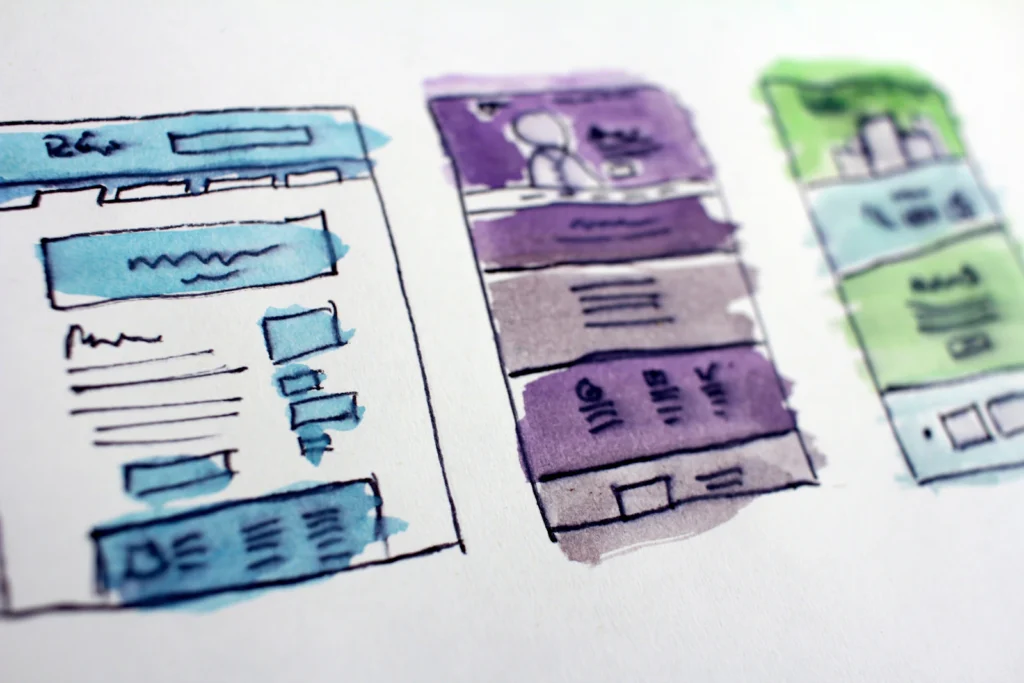
Mobile wireframes first, then visual design for key templates: home, treatment, location, first visit and contact.
- Two rounds of feedback
- Accessibility checks on the design
- 3
Weeks 4 to 8
Content and build
Page copy written and reviewed for accuracy, photography planned, templates built on a fast, maintainable platform.
- Structured data and tracking set up
- Forms and booking connected
- 4
Weeks 8 to 12
Testing and launch
Speed, accessibility, forms and redirects tested on real devices. Launch, then daily monitoring of indexing and traffic for the first weeks.
- Search Console checks
- Post-launch fix list
Owned or leased
Who really owns your website?
Some orthodontic website vendors lease the site to you. That can be convenient, but it changes what happens if you leave.
| Owned website | Leased website | |
|---|---|---|
| You own the design and content | Often not | |
| You can move hosts or agencies | Usually requires a rebuild | |
| Domain registered in your name | Varies, check carefully | |
| Upfront cost | Higher | Lower |
| Monthly cost | Hosting and maintenance | Ongoing lease fee |
| SEO history kept if you switch providers | At risk if the site is taken down |
Read more in our guide on owning your practice website. Every site we build belongs to you, including the domain, content and accounts.
Redesigns without losing rankings
Protecting your search visibility during a redesign
A redesign is one of the riskiest moments for organic traffic. Changed URLs without redirects, removed content and a staging block left in place after launch are the most common reasons a new site loses visibility. Use our orthodontist website SEO checklist before and after launch.
We crawl your current site before design starts, record every URL and its performance, decide what happens to each page, map 301 redirects and carry ranking content across. After launch we monitor Search Console daily until the new site settles.
- Full crawl and performance export before design
- Redirect map for every changed URL
- Ranking content preserved or improved
- Staging site blocked from indexing until launch
- Daily monitoring after launch

You may not need a new website
Sometimes targeted improvements beat a rebuild
If your site is on a sound platform, a full redesign may not be the best use of budget. Conversion-focused improvements can produce results faster: a faster hero, a shorter form, clearer treatment pages, a visible rating and an obvious booking button.
We start every website conversation with an honest assessment. If your current site can be improved, we will tell you, and we will show what the improvements are likely to involve.
Common quick wins
- Compress and resize hero images
- Make phone numbers tappable
- Cut forms to five fields or fewer
- Add a cost and financing page
- Show your review rating near the top
Page by page
The pages every orthodontic website needs
A strong site is not about page count. It is about having one excellent page for each question families bring to you.
Home page
The home page should tell a parent within seconds who you treat, where you are, why families choose you and how to book. It links to every key treatment and location page and shows real proof: your rating, review count, team photos and a clear consultation offer. It should not try to explain every treatment in detail.
Treatment pages
Each treatment you want to grow deserves its own page: braces, clear braces, clear aligners, early treatment, adult orthodontics and anything else you offer. A good treatment page explains who it suits, how it works, typical treatment time, cost factors and what happens at the consultation, with honest limits rather than promises.
| Section | What it answers |
|---|---|
| Who it suits | Is this right for my child or for me? |
| How it works | What will treatment actually involve? |
| Time and visits | How long and how often? |
| Cost factors | What affects the price and what payment options exist? |
| Next step | How do I book a consultation? |
Location pages
One page per office with the address, directions, parking, hours, team at that location, nearby landmarks and a map. These pages support local SEO and answer practical questions that often decide whether a family books.
First visit and consultation page
What happens at the first appointment, how long it takes, what to bring, whether there is a fee and how to book. This page often converts better than any other, because it removes the uncertainty that stops families from calling.
Cost, financing and insurance page
Families search for cost before they call. A page that explains cost factors, payment plans and insurance in plain language, even without exact prices, builds trust and ranks for valuable searches.
About and team pages
Real bios with credentials, training and a personal touch. These pages matter for trust and for search engines evaluating expertise in health content.
Before you decide
What working with us looks like
Straight answers to what practice owners and managers ask before a first call.
| Question | Answer |
|---|---|
| What does it cost? | Website design is quoted separately after a free audit, with the scope and price in writing. Monthly SEO plans start at $990, month-to-month. See pricing. |
| How does it start? | A short kickoff call, access to your accounts and a written plan before any work begins. See our process. |
| Who owns the accounts? | You do. Your Google Business Profile, Search Console, analytics, ads and website accounts stay in your name, and you keep everything if you leave. |
| Who does the work? | You work directly with the consultant, a dentist completing an MSD in Orthodontics. Every treatment page is clinically reviewed before it goes live. |
| Can we see results? | We are a new agency, so we do not show client logos or claimed numbers. Our first case study documents our own site rebuild, with ranking data added at 30, 60 and 90 days. We also publish original research. |
| When are we not the right fit? | If you need social media managed, or want guaranteed rankings or a fixed number of new patients. Our honest comparison explains when a general agency suits you better. |
Website questions
Orthodontic website design FAQ
What practice owners ask before starting a website project.
How much does an orthodontic website cost?
Cost depends on page count, custom design, content writing, photography and migration work. A redesign that includes keyword research, content and redirects costs more upfront but protects the visibility you have built. We quote after a short discovery call so the price matches the scope.
How long does a new orthodontic website take?
Most projects take eight to twelve weeks. The biggest variable is how quickly content and photos are approved.
Will I lose my Google rankings if I redesign?
Not if the redesign is handled carefully. We record every URL, map 301 redirects, keep ranking content and monitor Search Console after launch.
Which platform do you build on?
Usually WordPress with the block editor and a lightweight theme, because it is fast, widely supported and easy for your team to edit. We avoid heavy page builders that slow sites down.
Do I own the website?
Yes. You own the domain, design, content and accounts. If we stop working together, everything stays with you.
Can you integrate online scheduling and patient forms?
Yes, where your practice software supports it. We connect scheduling and new-patient forms securely and only collect what is necessary on the website.
Do you write the content?
Yes. We write treatment, location and first-visit pages, reviewed for clinical accuracy, and flag anything that needs your sign-off.
Is the website accessible?
We build toward WCAG 2.2 guidelines, including contrast, keyboard navigation, alt text and form labels, and test key templates before launch.
Can you just improve my current site instead?
Often, yes. If your platform is sound, conversion-focused improvements may deliver results faster than a rebuild.
Can you redesign our site without changing our URLs?
Often yes. Where URLs are already clean and descriptive, we keep them. Where they must change, every old URL is redirected to its new equivalent.
Do you provide hosting and maintenance?
We can recommend quality hosting and provide ongoing maintenance: updates, backups, security monitoring and small content changes. You keep full control of the hosting account.
Keep exploring
Related services and guides
Website design and CRO
For dental and healthcare practices.
Orthodontic SEO
Get the new site found.
9 orthodontic website mistakes
What costs consultations.
Own your practice website
Owned vs leased explained.
Tracking pixels and patient privacy
Analytics done carefully.
Technical SEO
Speed, indexing and structure.
Free website review
Find out what your website is costing you
We test your site on real phones, check speed, structure, content and the booking path, and send a prioritized list of improvements. No obligation.
- Mobile tested
- Speed and accessibility checked
- Honest rebuild-or-improve advice