Orthodontist Website SEO: A 12-Point Checklist (2026)
Short answer: orthodontist website SEO means building each page so Google, Google Maps and AI assistants can tell what you treat, where you are and why a parent or adult should book with you. In practice that comes down to one page per treatment, honest cost information, fast mobile pages, business markup and a booking path that works with one thumb.
By Dr. Mahmoud Elsheikh, a dentist completing an MSD in Orthodontics · Updated
We checked 30 orthodontic homepages in the 10 largest US cities for our 2026 orthodontic website study. Every one had a way to book or request a visit. Far fewer answered the questions patients ask first. The checklist below starts with those gaps.
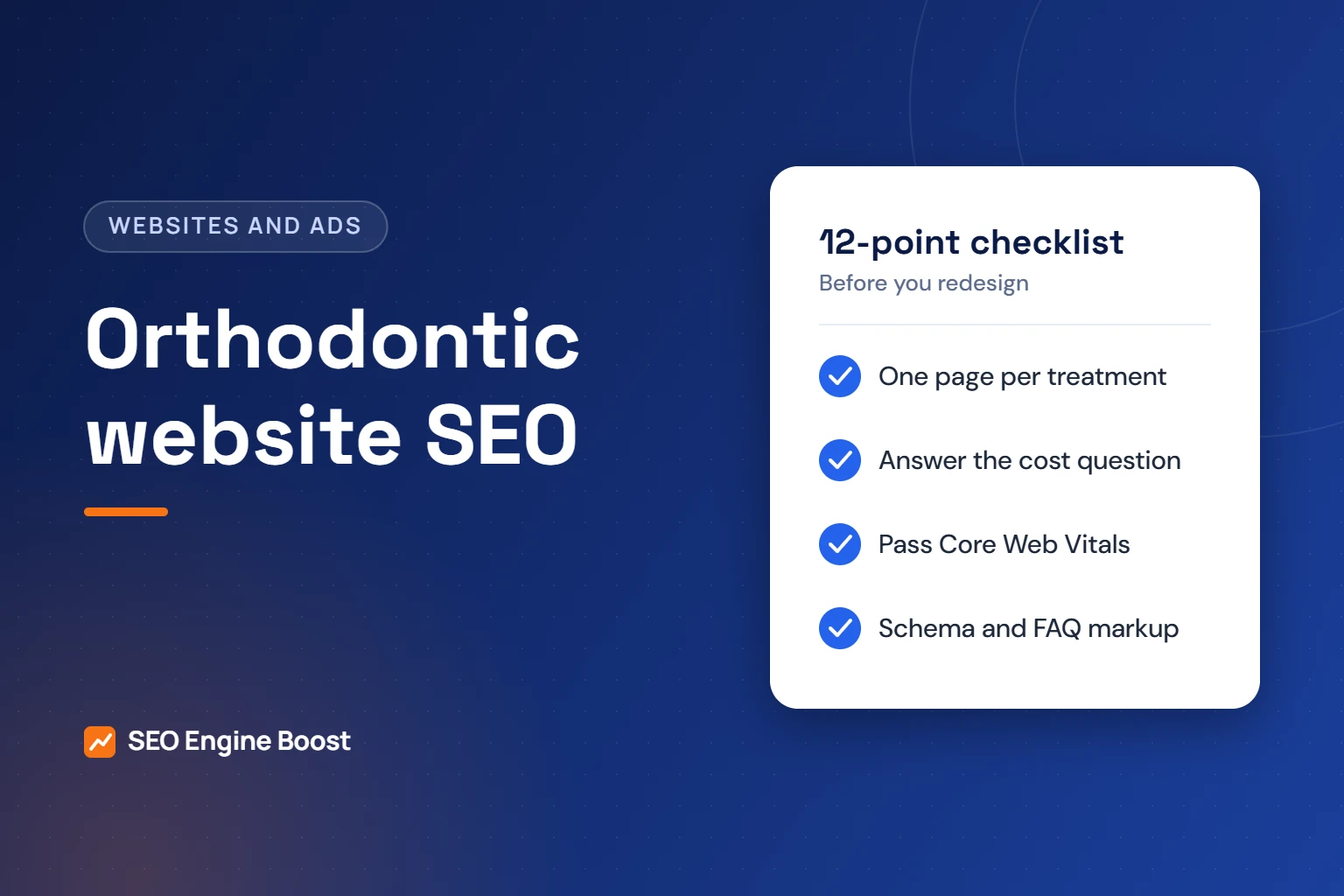
The 12-point orthodontist website SEO checklist
1. Give every treatment its own page
Braces, clear aligners, early treatment, adult treatment and retainers are different searches made by different people. A single “Services” page cannot rank for all of them. Give each treatment one page with one clear purpose, written for the person searching: a parent of a seven-year-old reads differently from a 34-year-old comparing aligners.
2. Write titles the way patients search
Patients type a treatment and a place: “Invisalign in Plano”, “braces for kids Tampa”. Put the treatment and city near the start of the title tag, keep it under about 60 characters and make each one unique. Google may rewrite titles that are vague or stuffed, so plain and specific wins.
3. Answer the cost question
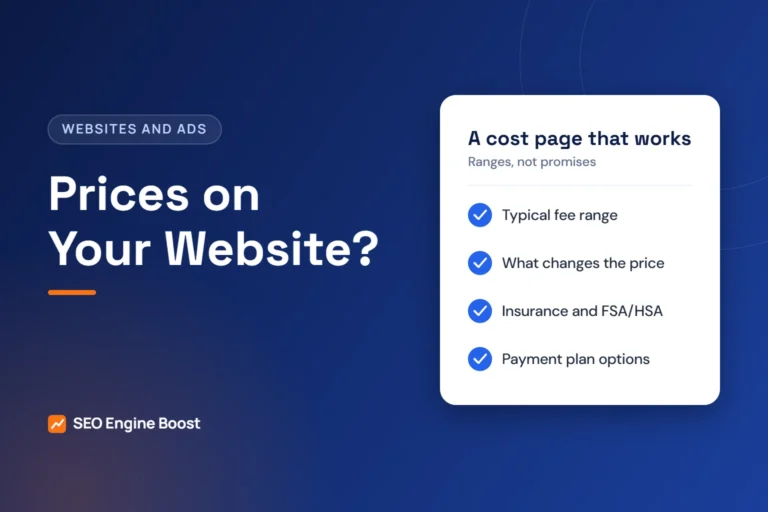
Cost is one of the first things patients want to know, yet only 5 of the 30 homepages we checked (17%) showed any treatment cost as a range or monthly figure. You do not need an exact price. A typical range, what affects it, and your payment and financing options are enough to keep a comparison shopper on your site instead of a competitor’s.
4. Publish an early-treatment page that mentions the age-7 check
The American Association of Orthodontists recommends a child’s first orthodontic check no later than age 7. Only 4 of the 30 homepages mentioned it. A calm, accurate page explaining what that first visit is (and that many children simply return for observation) earns trust with parents and matches a real search.
5. Make your location unmistakable
Google’s own guidance says local results depend on relevance, distance and prominence. Help with the first two: the same practice name, address and phone on every page and listing, a map embed, parking or transit notes, and a separate location page for each office if you have more than one.
6. Add business markup and FAQ markup
Half of the homepages we checked (15 of 30) had no business structured data at all. Add schema that states your practice name, address, phone, hours and the doctors, and mark up genuine on-page FAQs. Markup does not guarantee a rich result, but it removes guesswork for search engines and AI systems.
7. Pass Core Web Vitals on mobile
Most patients will see your site on a phone. Google’s “good” thresholds are a Largest Contentful Paint of 2.5 seconds or less, Interaction to Next Paint of 200 milliseconds or less and Cumulative Layout Shift of 0.1 or less. Compress hero images, load the main image first, and remove sliders and chat widgets that block the page. Test with PageSpeed Insights.
8. Shorten the path to booking
Put a tap-to-call button and a short consultation form on every treatment page. Ask only what you need to call back. If you offer virtual consultations, say so clearly: only 10 of the 30 homepages did. Track form submissions and calls without sending patient details to ad or analytics tools.
9. Show the real doctor and the real office
Patients choose a person. Use real photos of your team and office, a doctor bio with education and memberships, and accurate wording about credentials. If you describe anyone as a specialist, make sure it follows your state dental board’s advertising rules.
10. Keep clinical claims accurate
Overpromising (“perfect smile in 6 months”) hurts trust and can create risk. Explain what affects treatment time, what results depend on, and when a consultation is the only honest answer. Our free orthodontic website clinical checklist lists the common accuracy problems to look for.
11. Link your pages together on purpose
Link from the homepage to each treatment page, from each treatment page to the cost and financing page, and from articles back to the treatment they discuss. Use descriptive anchor text (“clear aligner treatment”) rather than “click here”. Breadcrumbs help both visitors and crawlers.
12. Make your facts easy for AI assistants to repeat
ChatGPT, Gemini and Google’s AI Overviews summarize what they can read and verify. State key facts in plain sentences (treatments offered, ages seen, locations, payment options), keep them identical on your site, Google Business Profile and directory listings, and answer common questions in short, direct paragraphs.
How to measure whether it is working
Connect Google Search Console to see which searches show your pages and which get clicked. Watch three numbers monthly: impressions for treatment searches, clicks to treatment pages, and consultation requests from the website. Rankings alone do not pay the bills; booked consultations do.
When to get help
Most practices can handle photos, bios and review requests in-house. Speed fixes, schema, keyword mapping and AI visibility work usually need someone who does this every day. If you want a second opinion, our free growth audit reviews your website, map listing and reviews by hand, or see how our orthodontist SEO company service works and what it costs.
Frequently asked questions
What is orthodontist website SEO?
It is the work of structuring an orthodontic practice website so search engines and AI assistants understand which treatments you offer, where you are and why patients should choose you, and so the pages load fast and lead to a consultation request.
How long does orthodontic website SEO take to work?
Technical and Business Profile fixes can show effects within weeks. Competitive treatment searches usually take several months, depending on your market, your starting point and how many quality links and reviews you earn.
Should an orthodontic website show prices?
Showing a typical range and your payment options usually helps, because cost is an early question for most patients. You do not need an exact quote; explain what affects the price and invite them to a consultation for their own figure.
Do I need a new website to improve SEO?
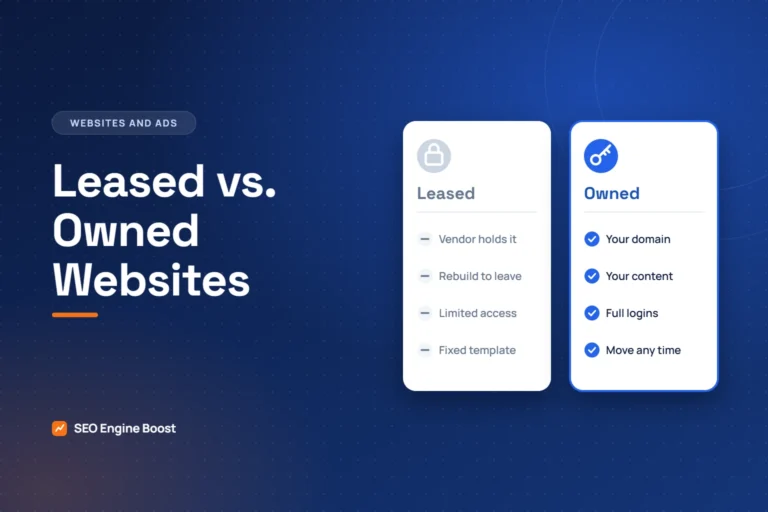
Not always. Many sites improve with new treatment pages, faster images, schema and a clearer booking path. A rebuild makes sense when the platform is slow, cannot be edited or is owned by a vendor rather than by you.
Sources
- SEO Engine Boost: Orthodontic Website Study 2026 (30 homepages, October 2026)
- Google Business Profile Help: Tips to improve your local ranking
- web.dev: Web Vitals
- Google Search Central: Influencing title links
- Google Search Central: Local business structured data
- American Association of Orthodontists (first orthodontic check by age 7)