Orthodontic Treatment Coordinator Playbook: Raising Case Acceptance Without Pressure
An orthodontic treatment coordinator (TC) raises case acceptance by running the same consult every time: a pre-call that sets expectations, a needs-first conversation, one clear recommendation, a simple fee presentation and a written next step before the family leaves. Most lost starts come from gaps in that process, not from price. This guide gives you the consult flow, scripts, objection responses, a same-day start policy and a tracking sheet that shows your acceptance rate by lead source.
Key takeaways
- Standardize the consult into seven stages so every patient gets the same experience, whichever TC they see.
- Present one recommended plan and one fee, then two or three payment options. Too many choices slow decisions.
- Offer same-day starts as an option when the doctor approves it clinically, never as a pressure tactic.
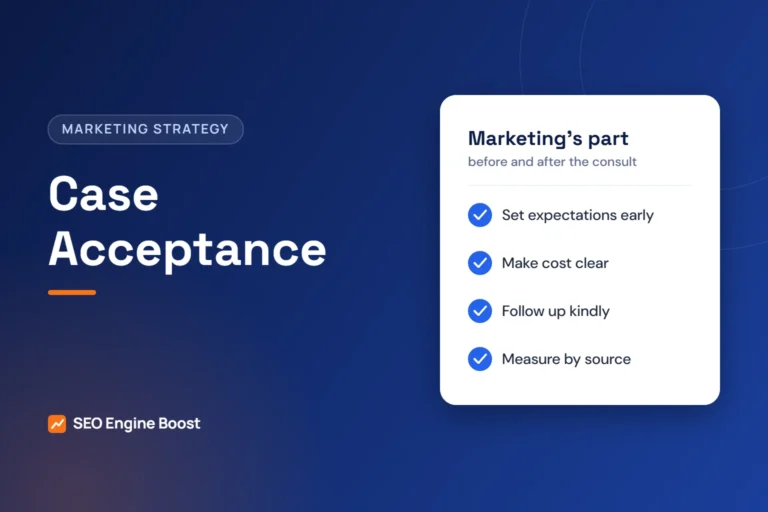
- Track acceptance by lead source, by TC and by patient type. A practice-wide average hides where starts are lost.
- Every patient who does not start leaves with a dated follow-up step, not “call us when you’re ready.”
What does an orthodontic treatment coordinator actually do?
The TC owns the patient’s decision journey from the moment a consult is booked until treatment starts or the patient is formally closed out. In most practices that means five jobs:
- Preparation: confirming the appointment, collecting forms and insurance details, and learning the patient’s main concern before the visit.
- Relationship: greeting the family, touring the office and finding out what matters to them (appearance, function, timing, budget, school or work schedules).
- Translation: restating the doctor’s recommendation in plain language and confirming the patient understood it.
- Financial conversation: presenting the fee, insurance estimate and payment options clearly and without apology.
- Follow-up: owning every pending patient until they start or decline.
The TC is not a closer. The doctor makes the clinical recommendation; the TC makes it easy to say yes to. When the role drifts into “sales,” families feel it and trust drops. When it drifts into “front desk with a nicer office,” follow-up is the first thing to slip.
The seven-stage consult flow
A predictable structure keeps the visit to a consistent length and makes coaching possible, because you can review each stage separately.
- Pre-consult call or text (24 to 48 hours before). Confirm the time, who should attend (both decision-makers for minors), what to bring (insurance card, prior records) and that the visit covers the exam, recommendation and costs.
- Welcome and discovery (5 to 10 minutes). Ask open questions before any clinical work: “What made you decide to come in now?” “If treatment went perfectly, what would be different?” Note the answers in the chart so the doctor can use the patient’s own words.
- Records and exam. The TC stays in the room or briefs the doctor on the patient’s goals beforehand, so the doctor speaks to those goals.
- Doctor recommendation. One recommended plan, the reason for it, an estimated treatment length and what happens if they wait. If there is a genuine alternative (for example, aligners versus brackets), the doctor names it and says which they recommend and why.
- TC recap. “So, Dr. Smith recommends… to fix… which should take about… Did that match what you were hoping to hear?” This catches misunderstandings before money is discussed.
- Financial presentation. Fee, insurance estimate, down payment and monthly options on one printed or on-screen sheet.
- Decision and next step. Start today, schedule a start date, or book a specific follow-up (call, text or second visit) with a date and a named TC.
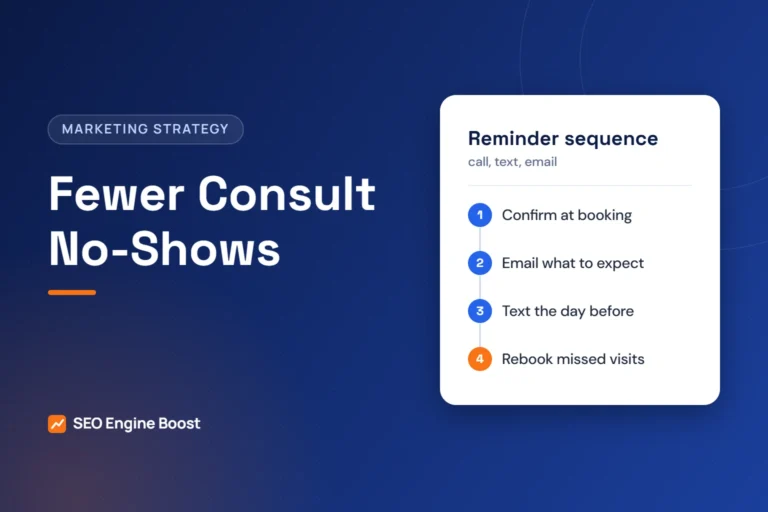
If your consults are often missed before they even happen, fix that first: see our guide to reducing orthodontic consult no-shows.
What should a treatment coordinator say? Scripts for each stage
Scripts are a starting point. Train the intent behind each line, then let TCs use their own voice.
Opening discovery
“Before Dr. Smith comes in, I’d love to know what brought you here. Is it something you’ve noticed, or did your dentist suggest it?” Follow with: “What’s most important to you about treatment: how it looks, how long it takes, or fitting it into your budget?”
Recap after the exam
“Let me make sure I explain this the way Dr. Smith would. Your bite is… and the plan is… Most patients with a similar plan are in treatment for around [doctor’s estimate]. What questions do you have about the treatment itself before we talk about investment?”
Fee presentation
“The total fee for your treatment is [fee]. That includes [what it includes: appointments, retainers, emergency visits, etc.]. Based on your insurance, we estimate your plan will contribute about [estimate], so your portion is [amount]. Most families choose one of these three ways to pay.” Then stop talking and let them look at the options.
Asking for the decision
“Which option feels best for your family?” If they hesitate: “It’s completely fine to take time. What would you need to know or check to feel comfortable deciding?”
How do you handle common objections?
Most objections are requests for more information or more time. Identify which one it is before responding.
| Objection | What it often means | Response approach | Next step to book |
|---|---|---|---|
| “It’s more than we expected.” | Monthly payment, not total fee, is the concern. | “Is it the total or the monthly amount that’s the concern?” Then show a longer term or lower down payment if your policy allows. | Revised payment sheet sent by text or email the same day. |
| “We need to talk it over.” | A decision-maker was absent, or they have an unasked question. | “Of course. What do you think your [spouse/partner] will ask? Let’s make sure you have that answer.” | Scheduled call with both decision-makers within 2 to 3 days. |
| “We’re getting other opinions.” | They are comparing price or approach. | “That’s smart. When you compare, check what’s included: retainers, refinements, emergency visits and the doctor’s training.” | Follow-up booked for after their other consult. |
| “Our dentist offers aligners for less.” | They see aligners as a commodity. | Explain, factually and without criticizing the dentist, how your doctor diagnoses and monitors treatment. | Send your comparison page or a short doctor video. |
| “Can we wait?” | Timing, school year or uncertainty about need. | Ask the doctor to state clearly whether waiting has any clinical downside. If it doesn’t, agree and set a recall date. | Observation or recall appointment on the calendar. |
For the general-dentist aligner objection in particular, our article on competing with general dentists on clear aligners covers positioning without disparaging referral sources.
Not sure where your practice stands? A free growth audit lists your top three fixes for Google, Maps and AI answers, in writing. Get a free growth audit · See our orthodontic marketing services
Should your practice offer same-day starts?
Same-day starts remove a second appointment and the drop-off that comes with it. They also require scheduling capacity and clear clinical rules. Decide your policy in writing so TCs are not improvising.
A same-day start policy template
- Clinical eligibility: the doctor decides which case types can start the same day (for example, records complete, no pending dental work or referrals, no surgical consult needed).
- Schedule capacity: block a specific chair time each consult day for starts, so saying yes does not wreck the afternoon.
- Financial readiness: contract signed, down payment taken and insurance information verified or flagged.
- Consent: informed consent reviewed and signed before any appliance is placed.
- No pressure language: TCs present same-day as a convenience (“We can start today if you’d like, or we can schedule you”), never with invented deadlines or discounts that expire at the door.
Track same-day starts separately so you can see whether they help or just shift starts earlier. If same-day patients have more early cancellations, the offer may be too aggressive.
How should financing and payment options be presented?
Keep the sheet simple: pay in full (with any courtesy your practice offers), standard in-house plan, and an extended option. If you offer third-party financing, the TC must explain the terms accurately. The Consumer Financial Protection Bureau’s 2023 report on medical credit cards and financing plans highlighted how deferred-interest products can surprise patients with back-dated interest. If you offer such a product, make sure patients understand how deferred interest works and offer your in-house plan alongside it.
For insurance, give an estimate, not a promise. Orthodontic benefits are often subject to a separate lifetime maximum and are frequently paid over the course of treatment, so explain how the plan pays and what happens if coverage changes.
How do you measure orthodontic case acceptance correctly?
Define your formula once and keep it. A common definition:
Case acceptance rate = treatment starts (or signed contracts) / patients who were recommended treatment at a completed consult, measured over the same period.
Exclude patients told “not ready yet” (observation or recall) from the denominator, but track them separately. Then segment:
| Segment | Why it matters | What to do with it |
|---|---|---|
| By lead source (Google Ads, organic, Maps, referrals, social, website form) | Some channels bring more ready-to-start patients than others. | Shift budget toward sources with better consult-to-start rates, not just cheaper leads. |
| By TC | Shows coaching needs. | Pair TCs for call reviews; compare stage by stage. |
| By patient type (child, teen, adult; aligners vs brackets) | Adults and parents decide differently. | Adjust scripts and follow-up cadence by segment. |
| Same-day vs scheduled start | Shows whether same-day offers help. | Review early cancellation rate by group. |
| Time to start | Long gaps signal a weak next step. | Tighten the follow-up schedule for pending patients. |
Illustrative example: a practice sees 40 recommended-treatment consults in a month. Twenty-four start within 60 days, giving a 60% acceptance rate. Segmenting shows referral consults started at a much higher rate than paid-search consults, so the next step is to review whether ad landing pages set accurate expectations on price and treatment type. Run your own numbers in our case acceptance rate calculator.
Lead source tracking only works if the source is captured at the first call or form. Set up call tracking for your orthodontic practice and a “how did you hear about us” field that the TC verifies at the consult. Then connect starts back to marketing spend using the approach in our guide to measuring orthodontic marketing.
What happens to patients who do not start at the consult?
Every consult ends in one of four statuses in your practice management system: started, scheduled to start, pending (decision outstanding) or observation/recall. “Pending” must always have an owner, a next contact date and a reason code (cost, timing, second opinion, decision-maker absent, unsure of need). Without reason codes you cannot fix the real problem.
Pending patients need a longer, structured follow-up plan with a set cadence of calls, texts and emails over the following months. The same discipline applies earlier in the funnel, as covered in our guide to following up on consultation requests.
A weekly TC coaching checklist
- Review two recorded or observed consults per TC (with patient consent and your state’s recording rules followed).
- Score each of the seven stages: done, partly done, skipped.
- Check that every non-start has a reason code and dated next step.
- Review acceptance by lead source for the last 30 and 90 days.
- Pick one stage to improve next week and role-play it for 15 minutes.
- Share one patient compliment with the team.
Want this done for your practice? We connect your marketing data to consults and starts so you can see which channels bring patients who actually begin treatment. Start with a free growth audit or see our published prices. Learn more about our orthodontic marketing services.
Frequently asked questions
What is a good orthodontic case acceptance rate?
There is no single public benchmark that fits every practice, because definitions vary. The useful comparison is your own rate over time, segmented by lead source, TC and patient type, using one consistent formula.
Should the treatment coordinator or the doctor present the fee?
In most practices the treatment coordinator presents the fee after the doctor makes the clinical recommendation. This keeps the doctor focused on diagnosis and gives the family time to ask financial questions comfortably.
How long should an orthodontic consultation take?
Set a consistent target length that covers discovery, records, the doctor’s recommendation and the financial conversation. Consistency matters more than the exact number because it lets you schedule same-day starts and compare TC performance.
Are same-day starts pushy?
Not if they are offered as a convenience, limited to cases the doctor approves clinically, and presented without false deadlines. Patients should always be free to schedule a later start.
How do I track case acceptance by marketing source?
Capture the lead source at the first call or form using call tracking and form fields, confirm it at the consult, and record starts against that source in your practice management system or a shared spreadsheet.