
12 Orthodontic Marketing Ideas That Respect Your Time and Budget
The most effective orthodontic marketing ideas are rarely the newest. They are the basics done consistently: be easy to find, be clear about what you offer, make it simple to request a consultation, and follow up quickly. The twelve ideas below are ordered from least to most effort, so a busy practice can start at the top.
Key takeaways
- Start with the basics: a correct Business Profile, real photos, one clear consultation button and a short form.
- Ask every patient for a review, with no rewards and no filtering.
- Skip bought reviews, bought links and near-identical city pages. The FTC rule and Google’s spam policies cover them.
In this article
- Low effort, do this week
- Moderate effort, do this month
- Higher effort, plan for the quarter
- Orthodontic marketing ideas to skip
- How to choose which orthodontic marketing ideas to start with
- What each idea costs in time and money
- Carrying out the low-effort ideas well
- Carrying out the higher-effort ideas well
- A 90-day plan built from these orthodontic marketing ideas
- Mistakes that waste a marketing budget
- Frequently asked questions
- A short checklist to keep
- Who should own marketing inside the practice
Low effort, do this week
1. Correct your Google Business Profile category and hours
Check that the primary category is Orthodontist and that hours, including holidays, are accurate. Google says complete and accurate profiles are more likely to appear in local results.
2. Add ten real photos
The front desk, a treatment chair, the team, the outside of the building and the parking. Parents want to see where their child will be treated.
3. Put a consultation button at the top of every page
One clear action, visible without scrolling on a phone. If visitors must hunt for the next step, some will not take it.
4. Shorten your consultation form
Ask only for what the front desk needs to make the call: name, phone or email, and who the treatment is for.
Moderate effort, do this month
5. Ask every patient for a review
Build the request into a routine moment. Do not offer rewards, and do not ask only the patients you expect to be positive. Google’s policies prohibit both.
6. Write a first-visit page
What happens, how long it takes, what it costs and what to bring. It answers the questions that stop a parent from booking.
7. Give each treatment its own page
Braces, clear aligners, early treatment, adult treatment and retainers. See our guide to content marketing for orthodontists for what each page should contain.
8. Thank your referring dentists properly
A short, specific update after a shared patient’s consultation does more than a gift basket. Make referring easy with a simple form.
Want help choosing which ideas come first?
A free growth audit shows which of these would make the most difference for your practice.
Higher effort, plan for the quarter
9. Support something local and be visible doing it
School events, youth sports and community groups build goodwill and often earn a mention or link on a local website, which supports local search visibility.
10. Test Google Ads on one treatment
Pick the treatment you most want to grow, send clicks to a dedicated page, and track calls and forms. Our guide to Google Ads for orthodontists explains what to set up first.
11. Review your follow-up speed
Record how long it takes to answer a new inquiry for two weeks. Many practices are surprised. See how follow-up affects bookings.
12. Track where consultations come from
Ask at the first call, record it, and compare it with your call and form tracking. Decisions about budget become much easier.
Orthodontic marketing ideas to skip
- Buying reviews, followers or links. The FTC’s rule on reviews and testimonials allows civil penalties against knowing violators, and Google treats bought links as spam.
- Dozens of near-identical city pages. Google’s spam policies describe these as doorway pages.
- Guarantees from any vendor about rankings or patient numbers.
For how these fit into one plan, see orthodontic marketing.
How to choose which orthodontic marketing ideas to start with
Twelve ideas are too many to start at once. Pick by the problem you actually have.
| If this is true | Start with | Why |
|---|---|---|
| Few people find the practice at all | Ideas 1, 2 and 7 | Visibility comes from the profile and from pages that match what people search for |
| People visit the website but do not get in touch | Ideas 3, 4 and 6 | The next step is unclear or the form asks too much |
| Inquiries arrive but do not become consultations | Ideas 11 and 12 | The gap is follow-up, not marketing |
| You have few or old reviews | Idea 5 | Recent reviews influence both ranking and trust |
| Referrals from dentists have slowed | Idea 8 | Relationships need regular, specific contact |
| The basics are done and you want faster growth | Ideas 9 and 10 | Community presence and a measured ad test add reach |
If you are unsure which row describes you, start by counting. How many calls and forms arrived last month, how many became consultations, and how many of those started treatment? The weakest step is where to begin. We explain the method in measuring orthodontic marketing.
What each idea costs in time and money
The ideas below are grouped the same way as the list above. No dollar figures are given, because prices differ by market and supplier.
| Idea | Time from the practice | Outside cost | How soon it shows |
|---|---|---|---|
| Correct the Business Profile | Under an hour | None | Days to weeks |
| Add real photos | An hour or two | None, or a photographer | Days |
| Consultation button on every page | A short request to your web provider | Low | Immediately |
| Shorter form | A short request to your web provider | Low | Immediately |
| Ask every patient for a review | A few minutes a day | None | Weeks |
| First-visit page | Two hours to write and check | Low | Weeks |
| A page for each treatment | Several hours per page, plus clinical review | Medium | Weeks to months |
| Thank referring dentists | An hour a week | None | Months |
| Local sponsorship | A few hours a quarter | Varies | Months |
| Google Ads test | Setup time plus weekly checks | Ad spend plus management | Days |
| Follow-up review | Two weeks of record keeping | None | Immediately once fixed |
| Source tracking | A minute per new patient | None | After a full quarter |
Carrying out the low-effort ideas well
Photographs
Use natural light, tidy the background and avoid empty rooms. A parent wants to picture their child in the chair, so include the team at work, with written consent from anyone identifiable. Add the same photos to your website and your Business Profile, and replace them when the office changes.
The consultation button
Use the same words everywhere, for example “Request a consultation”. Place the button in the header so that it stays visible on a phone. If you offer free consultations, say so beside the button. That one sentence removes a common reason for hesitation.
The form
Three fields are enough: a name, a phone number or email address, and who the treatment is for. Add an optional field for preferred days. Do not ask for insurance details, date of birth or a description of the problem at this stage. Those belong in the first conversation, and collecting health details on a website form raises privacy questions. See tracking pixels and patient privacy.
The review request
Choose one or two moments in treatment, such as the day braces come off, and ask every patient at those moments. Hand over a card with a QR code or send a text with a direct link the same day. Use neutral wording and offer nothing in return. The full process is in how to get more Google reviews.
Carrying out the higher-effort ideas well
Referring dentists
A referral relationship is built on reliability. After each shared patient’s consultation, send the referring dentist a short note: what you found, what you recommended and what happens next. Make referring simple with a one-page form or a secure online link, and name one person in your office as the contact for referring practices. Visit in person once or twice a year. General and pediatric dentists refer to the orthodontist they hear from, not the one who sent a gift basket in December.
Local involvement
Choose one or two commitments you can keep for years rather than ten one-off sponsorships. A school sports team, a science fair or a community health day all put the practice in front of the families you treat. Ask the organizer to list the practice on their website with your correct name and address. Those local mentions support local search visibility, and they are earned rather than bought.
A Google Ads test
Treat the first sixty days as an experiment with a fixed budget. Advertise one treatment, send every click to a page about that treatment, and track calls and forms from the first day. At the end, work out the cost of each consultation request and decide whether to continue. Without tracking, the test tells you nothing.
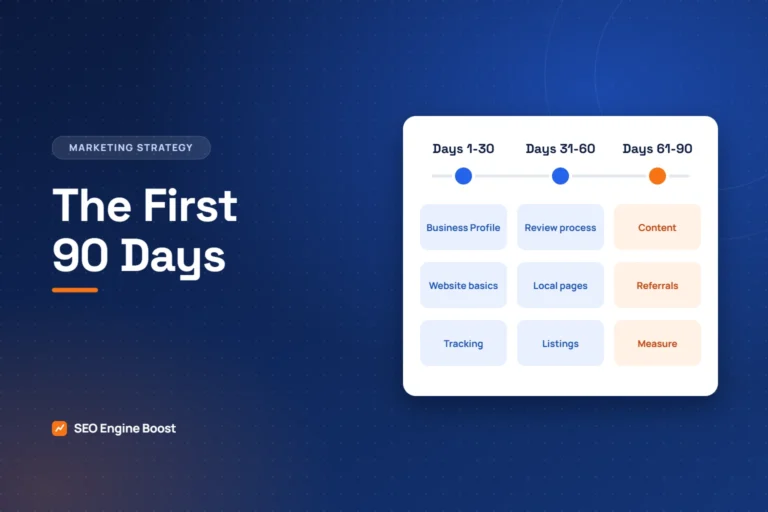
A 90-day plan built from these orthodontic marketing ideas
| Weeks | What to do | Who does it |
|---|---|---|
| 1 to 2 | Correct the Business Profile, add photos, add the consultation button, shorten the form | Practice manager and web provider |
| 3 to 4 | Start asking every patient for a review; record follow-up times for two weeks | Front desk |
| 5 to 8 | Publish the first-visit page and the two most important treatment pages | Writer, with the doctor approving |
| 9 to 10 | Contact referring dentists with an update and a simpler referral form | Doctor and treatment coordinator |
| 11 to 12 | Add a source field to new patient records and review the first quarter | Practice manager |
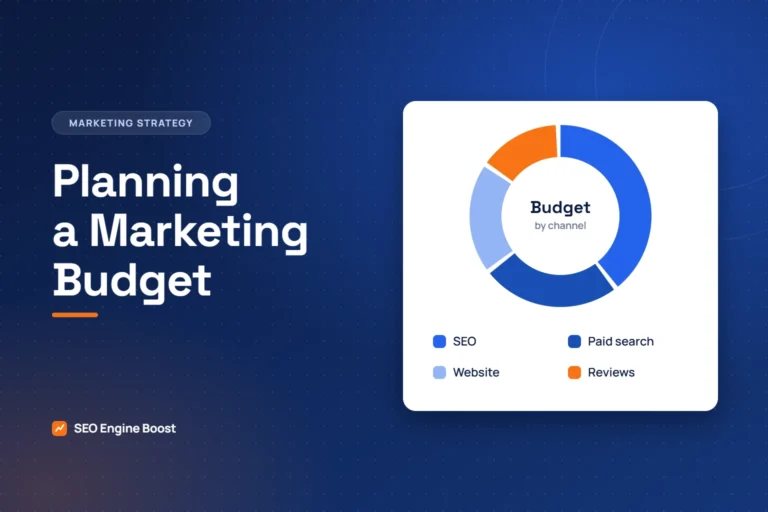
At the end of ninety days you will have a complete profile, a clearer website, a steady flow of reviews and the first real numbers on where consultations come from. That is the point at which paid advertising and larger projects become worth considering. How to pay for them is covered in planning an orthodontic marketing budget.
Mistakes that waste a marketing budget
- Starting with advertising. Ads send people to your website and profile. If those are weak, you pay for visits that do not convert.
- Changing direction every month. Most of these ideas need a quarter to show results. Constant switching means none of them gets a fair test.
- Leaving it all to one person with no time. Assign each task to a named person and check it monthly.
- Copying a competitor. Their situation is not yours. A practice with three hundred reviews needs different priorities from one with thirty.
- Measuring likes and followers. Social media numbers are easy to count and rarely connected to consultations.
- Skipping the follow-up. An inquiry that waits two days for a reply has often booked elsewhere. See consultation request follow-up.
Not sure which idea to start with?
A free growth audit shows where your visibility, website, reviews and content stand today, so you can choose the first step with evidence.
Frequently asked questions
Which orthodontic marketing ideas work fastest?
The ones that remove friction: a correct Business Profile, a visible consultation button, a shorter form and faster follow-up. They do not create new demand, but they stop you losing the demand you already have, and the effect shows within weeks.
How many of these ideas should a practice run at once?
Three or four. Finish the low-effort group first, because everything else depends on it. Add one moderate-effort idea each month after that.
Do orthodontic marketing ideas differ for a new practice?
The order changes. A new practice has no reviews and no referral history, so the profile, the first reviews and introductions to nearby dentists come first. We set out the sequence in marketing a new orthodontic practice.
Is social media worth the time?
It can support the practice’s reputation and give parents a sense of the team, but it rarely produces consultation requests on its own. Keep it simple and consistent, and do not let it replace the basics.
Should we offer discounts or promotions?
That is a business decision rather than a marketing one. If you do, make the terms clear and keep them the same for everyone. Never tie a discount or gift to a review. Google’s policies and the FTC’s rule on reviews both prohibit incentives of that kind.
How do we know which idea produced a new patient?
Ask every new patient how they heard about you, record the answer in the same field every time, and compare it with your call and form tracking each quarter. No method is perfect, but two imperfect sources that agree are reliable enough to act on.
What if we have no time for any of this?
Then decide what to hand over. The tasks that must stay inside the practice are asking for reviews, replying to them, approving clinical content and recording patient sources. Everything else can be done by a specialist. Our orthodontic marketing service covers that work.
Are there orthodontic marketing ideas we should avoid completely?
Yes: buying reviews, followers or links, publishing dozens of near-identical city pages, and signing any contract that guarantees rankings or patient numbers. Each of these either breaks a published rule or promises something nobody controls.
A short checklist to keep
- The Business Profile shows the right category, hours and photos.
- Every page has one clear consultation button.
- The form asks for three things only.
- Every patient is asked for a review at the same point in treatment.
- New inquiries are answered within the same working day.
- Every new patient record has a source.
- Results are reviewed once a quarter, and one thing is changed as a result.
Who should own marketing inside the practice
Ideas fail when nobody is responsible for them. Name one person, usually the practice manager or treatment coordinator, as the owner of marketing. That person does not have to do the work, but they keep the list, chase the web provider, check that reviews are being requested and bring the numbers to a short monthly meeting with the doctor. Fifteen minutes is enough: what was done, what the numbers show and what happens next month. A practice that holds that meeting every month will get more from a small budget than one that spends heavily and never reviews the result.
When to bring in outside help
Bring in a specialist when the low-effort ideas are done and the next ones need skills the team does not have: writing treatment pages, fixing a slow website, managing listings or running advertising. Ask for a written plan with quantities and a monthly report that leads with inquiries. If the plan starts with advertising before the basics above are in place, ask why. A free growth audit is a sensible first step, because it shows which of these ideas would matter most for your practice before you commit to anything.
Keep reading
Reviews and Compliance
How to Get More Google Reviews for Your Orthodontic Practice (Within the Rules)
See where your practice stands
If you would like a second pair of eyes on your own practice, we offer a free growth audit: a manual review of your local visibility, website, reviews and content, with a prioritized list of what to fix first.