
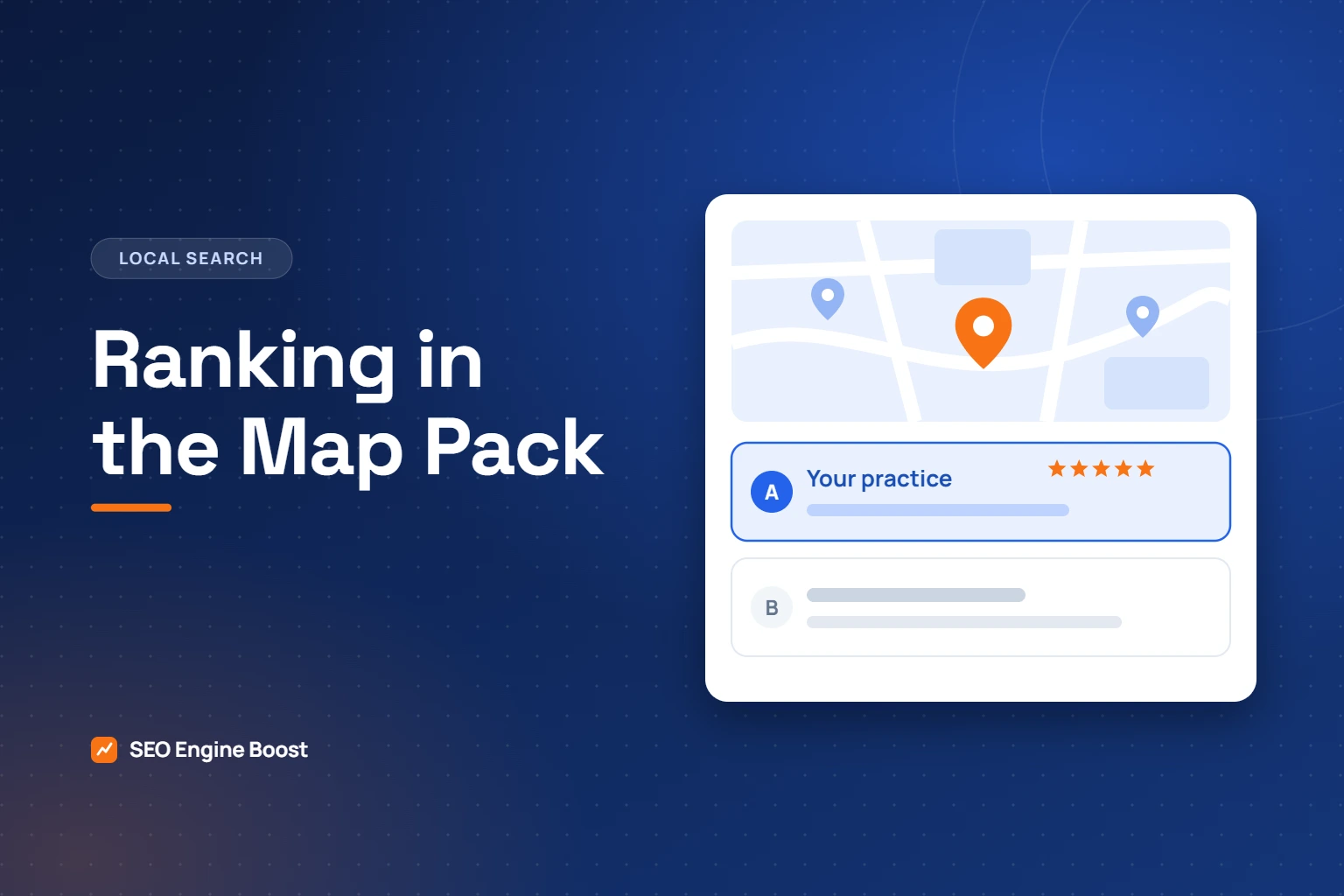
How to Rank in the Google Map Pack as an Orthodontist
Orthodontist Google Maps rankings are decided in the map pack, the block of three local results that appears above the regular listings when someone searches for an orthodontist. Google says these results are based mainly on three factors: relevance, distance and prominence. You cannot buy a place in them, and Google is explicit that there is no way to request or pay for a better local ranking. What you can do is improve the two factors you control.
Key takeaways
- Google bases local results mainly on relevance, distance and prominence, and you cannot pay for a better position.
- You control relevance and prominence: category, services, reviews, local mentions and consistent listings.
- Check visibility from several points across your area, not from your own office.
In this article
- The three factors, in plain terms
- Improve relevance
- Work with distance, not against it
- Build prominence
- Common reasons a practice does not appear
- A realistic orthodontist Google Maps plan
- How to check where you really appear
- Build a location page that supports the profile
- Earn local mentions the right way
- Keep reviews arriving
- If you have more than one location
- An illustrative example
- Common myths about the map pack
- What to measure each month
- Frequently asked questions
- A first-month action list
- When to ask for help
The three factors, in plain terms
| Factor | What Google means | Can you change it? |
|---|---|---|
| Relevance | How well your profile matches the search | Yes: category, services and description |
| Distance | How far your office is from the searcher | No, but your content can show which areas you serve |
| Prominence | How well known the business is, including links and reviews | Yes: reviews, mentions and website quality |
Improve relevance
- Set the primary category to Orthodontist.
- List every treatment as a service.
- Make sure the website page linked from the profile clearly describes orthodontic treatment at that address.
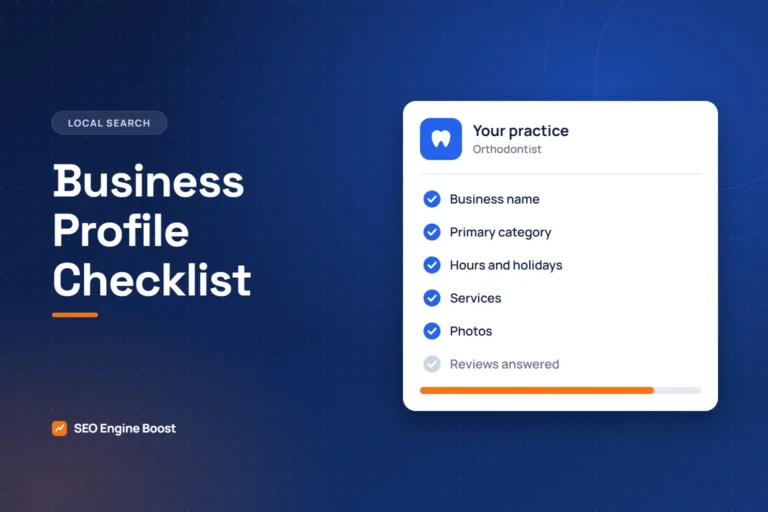
- Keep the profile complete. Google says complete and accurate profiles are more likely to appear.
Work with distance, not against it
Distance is measured from the person searching, so your position changes from one neighborhood to the next. That is why checking your ranking from your own office tells you very little. Check from several points across the area you serve.
You cannot move closer to a family across town, but you can make it clear that you serve them: a location page with directions from nearby areas, the schools you work with and travel times gives both patients and Google a reason to connect you with that area.
Avoid creating a near-identical page for every town. Google’s spam policies describe pages built only to rank for similar queries as doorway pages.
How visible is your practice on the map?
The free growth audit covers your Business Profile, map results and listings.
Build prominence
Google says prominence depends on factors such as how many websites link to the business and how many reviews it has, and that more reviews and positive ratings can help.
- Reviews: ask every patient, steadily, so reviews stay recent.
- Replies: answer each one. Google notes that replying shows you value feedback.
- Local mentions: schools, clubs and community organizations you support often list sponsors on their websites.
- Consistent listings: the same name, address and phone number everywhere.
Common reasons a practice does not appear
- The primary category is Dentist rather than Orthodontist.
- The profile is unverified, duplicated or suspended.
- Hours are missing, so the practice appears closed.
- Two businesses at the same address are being confused.
- There are few or no recent reviews.
A realistic orthodontist Google Maps plan
- Week 1: fix category, hours, services and duplicates.
- Weeks 2 to 4: add photos, write the location page, correct listings.
- From month 2: steady review requests and regular posts.
- Every month: check visibility from several points and review calls and direction requests.
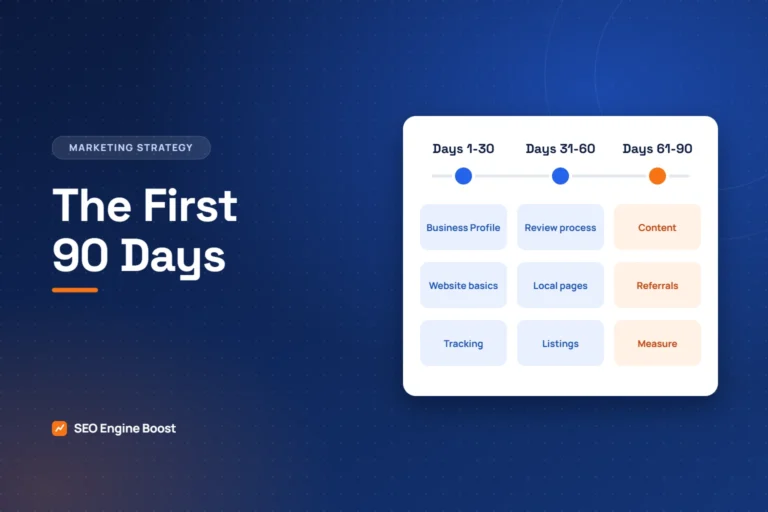
Profile fixes can show quickly. Review momentum and area relevance build over months. If you want this managed, see local SEO for orthodontists.
How to check where you really appear
Because distance is measured from the searcher, there is no single ranking for a practice. There is a different result on every street. A simple manual check gives a truer picture than any one number.
- List the five or six areas your patients come from: neighborhoods, nearby towns and the main schools.
- For each area, search for “orthodontist near me” and two treatment terms, such as “braces” and “clear aligners”, from a phone located in that area. Ask a team member or a friend who lives there if you cannot go yourself.
- Use a private browsing window and sign out of your Google account, so that your own history does not influence the result.
- Record whether the practice appears in the three map results, lower in the map list or not at all.
- Repeat every quarter and compare.
| Area | Orthodontist near me | Braces | Clear aligners |
|---|---|---|---|
| Around the office | |||
| Neighborhood to the north | |||
| Town to the south | |||
| Near the largest school |
A grid like this shows where your orthodontist Google Maps visibility is strong and where it fades. It also shows whether the work is making a difference, which a single search from the front desk never can.
Build a location page that supports the profile
The page your profile links to tells Google and patients what the office is and where it is. A strong location page includes:
- The practice name, full address and phone number, written exactly as they appear on the profile.
- Opening hours, including early or late appointments.
- A map and plain directions from two or three nearby areas, with parking and public transport details.
- The treatments offered at that office, each linking to its own page.
- The doctors and team who work there, with real photographs.
- The schools, neighborhoods and towns you commonly see patients from, mentioned naturally in a sentence or two.
- A clear way to request a consultation.
What to leave out: lists of dozens of place names, paragraphs repeated from other location pages, and anything written for a search engine rather than a parent. One honest page per real office is the rule. Our local SEO for orthodontists service builds these pages as part of the work.
Earn local mentions the right way
Google says prominence is partly based on information from across the web, such as links and directories. For a practice, the useful mentions are local and real.
| Source | How to earn it | Worth knowing |
|---|---|---|
| Schools and parent associations | Sponsor a team, a fair or a yearbook | Ask for the practice to be listed with its correct name and address |
| Youth sports clubs | Support a season or supply mouthguards | Sponsors are often listed online |
| Local chamber of commerce | Join and complete your member profile | A consistent, trusted listing |
| Professional associations | Keep member directories up to date | Supports the doctor’s credentials |
| Local news | Offer a useful comment or mark a real milestone | Earned, never paid for as a link |
| Referring dental offices | Ask to be listed on their referral or partners page | Reflects a real relationship |
Avoid paying for links or joining schemes that promise a set number of backlinks each month. Google’s spam policies treat buying links for ranking purposes as link spam, and a practice has more to lose than to gain.
Keep reviews arriving
Reviews influence prominence, and parents read them before they call. A burst of reviews followed by months of silence helps less than a steady flow.
- Pick one or two moments in treatment and ask every patient at those moments.
- Send a direct link by text the same day, or hand over a card with a QR code.
- Use neutral wording. Never ask for five stars and never offer a reward.
- Reply to every review within a few days, briefly, without confirming that the reviewer is a patient.
- Track the count and the date of the latest review each month.
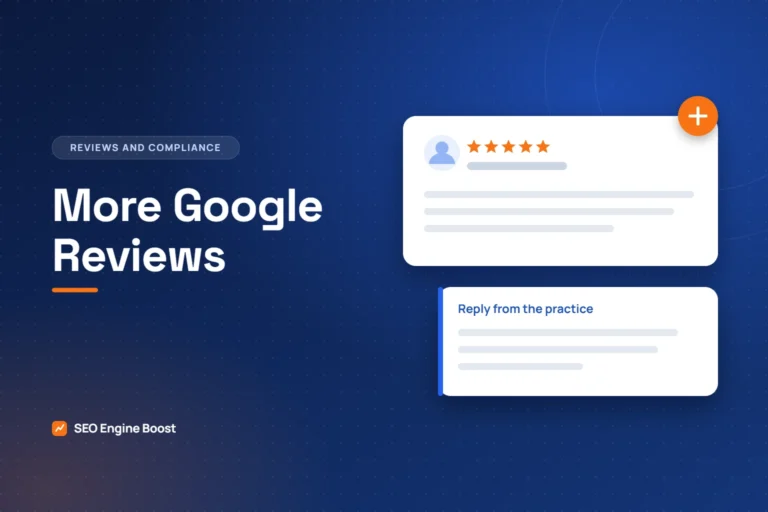
The rules and a fuller process are in how to get more Google reviews.
If you have more than one location
Each office competes separately, because distance is measured to each address.
- Give every office its own verified profile, its own phone number and its own location page.
- Link each profile to its own page, never to the home page.
- Ask for reviews on the profile of the office where the patient was treated.
- Keep names consistent: the practice name, with no town added unless it is part of the real-world name.
- Check the grid separately for each office. One location can be strong while another is barely visible.
An illustrative example
This example is invented to show how the three factors interact. It is not a prediction.
Two practices sit a mile apart. The first has a complete profile, the Orthodontist category, two hundred reviews with several from the last month, and a location page that describes the office. The second has the Dentist category, forty older reviews and a profile that links to a home page with one line about orthodontics.
For a parent standing between them, distance is equal, so relevance and prominence decide. The first practice is the stronger match on both. For a parent standing next to the second practice, distance now favors it, and it may still appear. That is why the same two practices can swap places from one neighborhood to the next, and why improving the factors you control widens the area in which you are shown.
Common myths about the map pack
- “You can pay to be in the three map results.” Google states there is no way to request or pay for a better local ranking. Ads are separate and are labeled as ads.
- “More categories mean more searches.” Google asks for the fewest categories that describe the core business. Extra categories dilute the profile.
- “Adding the city to the business name helps.” It breaks Google’s guidelines and can lead to suspension.
- “Reviews only count if they are five stars.” A believable mix with thoughtful replies builds more trust than a perfect score with no detail.
- “Once you rank, you stay there.” Competitors open, reviews age and information changes. Visibility needs upkeep.
- “A virtual address in the next town gets you a second listing.” A profile should represent a real location where patients are seen.
What to measure each month
| Number | Where to find it | What it tells you |
|---|---|---|
| Searches and views | Business Profile performance | Whether more people are seeing the profile |
| Calls, directions and website clicks | Business Profile performance | Whether they act on what they see |
| New reviews and latest review date | The profile itself | Whether the review process is running |
| Map position by area | Your quarterly grid | Where visibility is growing or fading |
| New patients who said “Google” or “Maps” | Your patient records | Whether any of it reaches the chair |
The last line matters most. The others explain it.
Want an outside view of your local visibility?
A free growth audit reviews your local visibility, website, reviews and content by hand.
Frequently asked questions
Why does a competitor farther away appear above us?
Distance is one of three factors. A practice that is a stronger match for the search, or better known through reviews and mentions, can appear ahead of a closer one. Check your category, services, reviews and the page your profile links to.
How long does it take to improve orthodontist Google Maps visibility?
Corrections to a profile, such as the category or hours, can show within days or weeks. Review momentum and local mentions build over months. Expect the area in which you appear to widen gradually rather than all at once.
We rank first when we search from the office. Is that enough?
No. Everyone near your office sees you first. The question is how far that visibility extends. Use the grid above to check from the areas your patients actually come from.
Does our website affect the map results?
Yes. Google says prominence takes into account information from across the web, and the page linked from your profile helps establish what the office does and where. A clear location page supports the profile. A slow or thin one does not.
Should we answer the questions people post on our profile?
If your profile shows a questions section, check it regularly and answer promptly, because questions there may also be answered by other people. Keep replies factual and general, and never discuss an individual’s care.
Do photos help?
They help people choose, which is the point. A profile with real, recent photos of the office and team gives a parent a reason to click. Google says complete and accurate profiles are more likely to appear, and photos are part of a complete profile.
Is it worth paying for local ads as well?
Ads can add visibility in areas where you do not yet appear organically, and they are clearly marked as ads. Set up tracking first, and treat the first two months as a test. See what to set up before you spend.
What is the single most common problem you see?
The primary category. A specialist practice listed as Dentist is competing for general dental searches and is a weaker match for orthodontic ones. It takes a minute to fix and is the first thing to check.
Can we do all of this ourselves?
Much of it, yes. The profile, the photos, the review requests and the quarterly grid need no special tools. Location pages, listing clean-up and tracking are where practices usually want help. The full profile review is in our Google Business Profile checklist.
A first-month action list
- Confirm the primary category is Orthodontist and the name matches your signage.
- Complete hours, services and the description.
- Find and report duplicate or outdated profiles.
- Add ten real photographs.
- Write or improve the location page and link the profile to it.
- Start asking every patient for a review at a set point in treatment.
- Run the first grid check and save it as your baseline.
Seven steps, most of them free. Done in order, they address the two factors you control and give you a baseline to measure everything that follows.
When to ask for help
Most of this article can be done by a practice manager with an hour a week. Outside help earns its fee in three situations: when duplicate or suspended profiles need untangling, when a website needs proper location pages and technical fixes, and when a practice with several offices needs each one managed consistently.
In each case, ask for the same things you would ask of any provider: a written list of what will be done, access that stays in the practice’s name, and a monthly report that shows calls, direction requests and consultation forms before it shows rankings. A provider who promises a place in the map pack by a certain date is promising something Google says cannot be requested or bought.
Keep reading
Reviews and Compliance
How to Get More Google Reviews for Your Orthodontic Practice (Within the Rules)
See where your practice stands
If you would like a second pair of eyes on your own practice, we offer a free growth audit: a manual review of your local visibility, website, reviews and content, with a prioritized list of what to fix first.